Table of Contents
Preface
I picked up Down and Out in Paris and London at a local book sale. There was a really nicely made Orwell pack on the table, nine books wide. This book is chronologically the first, and it’s somewhat autobiographical. I expected it to be denser and drier, but it’s really a light read, sprinkled with some high-grade dark humor.
Context
The book is a memoir of two distinct modes of poverty. The first half is “static”, and it’s set in Paris, where Orwell works as a plongeur, surrounded by a multilingual cast of cooks, waiters, and Russian political exiles.
The second half is set in England, where he goes “on the road” as a tramp, sleeping in common lodging houses. The book was published in 1933, when Orwell was about thirty and still using his real name, Eric Blair.
This book is a mix of journalism and fiction. I think it’s safe to say that its aim is to describe a class of people whose lives most readers, then as now, would prefer to read about rather than experience.
Paris
I liked the first half the most. Orwell didn’t try to glorify the working class, his description reads as an honest and unbiased take. Most characters are pretty complex creatures, neither good nor evil. There are also some reflections on how and why this status quo is maintained, which I will list in the quotes section.
London
The London half is much more blunt. English tramps are quite different from the French working class, although united in poverty. There are no job descriptions in this part of the book, mostly because tramps were discouraged from work, and some were unwilling to work anyway, since they could stay alive by moving from charity to charity and getting free but terrible food and shelter.
Quotes
It would have been a pleasure to flatten the Jew’s nose, if only one could have afforded it.
I guess antisemitism was quite common in 1930s Western Europe?
You have talked so often of going to the dogs - and well, here are the dogs, and you have reached them, and you can stand it. It takes off a lot of anxiety.
There is only one way to make money at writing, and that is to marry a publisher’s daughter.
Writing was never an easy profession.
Trust a snake before a Jew and a Jew before a Greek, but don’t trust Armenian.
Armenians are Christian, by the way, so it’s not even about religion or race. Europeans never needed a solid reason to hate each other.
The waiter’s outlook is quite different. He too is proud in a way of his skill, but his skill is chiefly in being servile. His work gives him the mentality, not of a workman, but of a snob.
Very interesting distinction between cooks and waiters. Orwell argued that cooks are “abstracted away” from the end client (rich people), so they have stronger working-class affiliation, while waiters are “poisoned” by contact with rich people to the point that they forget that they are themselves no richer than other workers.
One cannot say that it is mere idleness on their part, for an idle man cannot be a plongeur; they have simply been trapped by a routine which makes thought impossible.
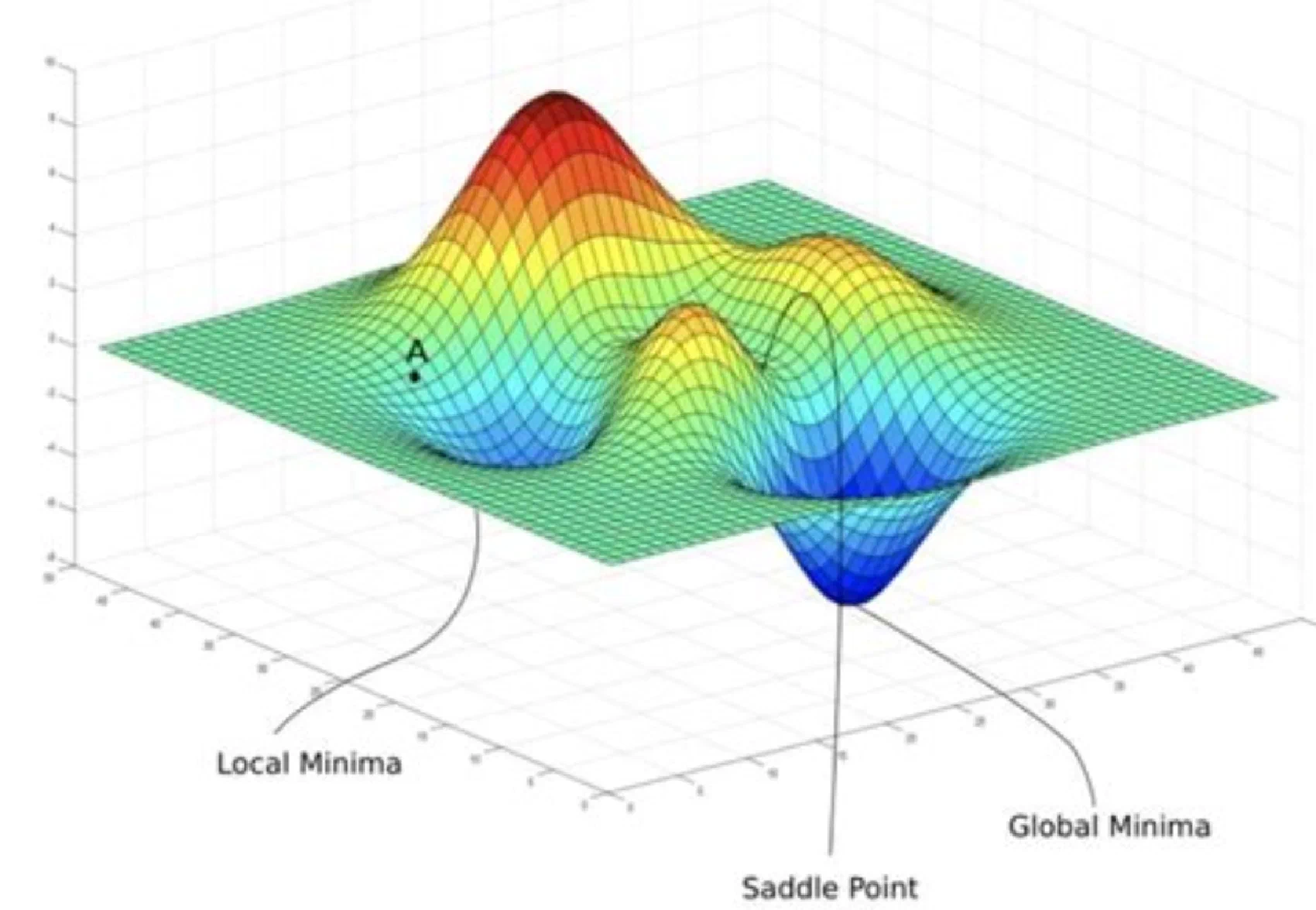
That’s a common observation, and it is very real. When you work too much, it’s hard to pause and see the big picture. In machine learning, people call it a local minimum. Reaching the global minimum and optimizing your life requires some time to think things through.
These are instances of unnecessary work, for there is no real need for gharries and rickshaws; they only exist because Orientals consider it vulgar to walk.
I spent half of my life in Asia, and I must say many people there still consider it vulgar to walk.
Very few cultivated people have less than four hundred pounds a year, and naturally they side with the rich, because they imagine that any liberty conceded to the poor is a threat to their own liberty.
This is very true. I met some guys earning $1k-$2k a month who were genuinely scared of a social revolution, because they thought their stuff would be taken by the mob.
The thought of not being poor made me very patriotic. The more questions the Roumanians asked, the more I praised England; the climate, the scenery, the art, the literature, the laws - everything in England was perfect.
Then the question arises, Why are beggars despised? - for they are despised, universally. I believe it is for the simple reason that they fail to earn a decent living. In practice nobody cares whether work is useful or useless, productive or parasitic; the sole thing demanded is that it shall be profitable. In all the modern talk about energy, efficiency, social service and the rest of it, what meaning is there except ‘Get money, tet it legally, and get a lot of it’? Money has become the grand test of virtue.
Vocabulary
1933 is almost a century ago and some words disappear or change meaning. I had to look up those four:
Tramp
In 1930s British English, tramp was a neutral term for a homeless man. It’s a bit more specific than vagrant (legal status) and less insulting than bum.
Wandering Jew
The Wandering Jew is a medieval European legend about a man who refused to let Christ rest on the way to the crucifixion and was condemned to walk the earth until the Second Coming. Tramps were moving in a similar way, mostly due to English laws discouraging “settlement”. You had to seek a new location every day in order to get free food and a place to stay overnight.
Blackguard
Black guard was an old term for the lowest servants of a household or army. It reminded me of the Black Hundreds in the Russian Empire, where the word “black” has a similar etymology (common guy, pleb). In English, “black” evolved to be less classist and more offensive/derogatory by the 1930s.
Chinaman
This is probably the most offensive of the four. Chinaman, in 1930s British and American writing, was not used to refer to China. It was more of an archetype: mysterious, inscrutable, sinister.
Conclusion
Down and Out in Paris and London is a relatively short, well‑paced, and pretty funny book. I liked the Paris part more, and I’m looking forward to the next eight books in chronological order. I read some of them a long time ago, but I hardly remember anything except that they were good.