Table of Contents
Definitions Matter
When I say “capitalism”, I mean an economic system in which the means of production are mostly privately owned, most production is carried out by large profit-seeking organizations, and labor is typically exchanged for wages.
The word itself dates to around 1850, when Louis Blanc used it in its modern sense, which suggests the system it names slightly predates the label.
I mean exactly that system, not the definitional gerrymandering that tries to stretch “capitalism” to cover the Roman Empire or modern China.
Markets Came First
Markets are older than capitalism by thousands of years. Capitalism requires capital (accumulated, investable wealth), a class of people who not only can but must sell their labour to survive, state-enforceable property titles, and credit.
Markets require none of that. Two people with something to swap are enough.
The confusion comes from capitalism’s knack for passing itself off as natural, a basic, inalienable human condition. It isn’t. It just grafted itself onto free-market narratives older than itself to keep going.
Markets Without Capitalism
If markets needed capitalism, they would disappear wherever capitalism is abolished. They don’t. Markets outlive every attempt to abolish them.
The Soviet Union had collective farm markets, where collective farmers sold produce from their private plots. Prices there were set by supply and demand and were generally much higher than state prices. The state disliked this, but it needed these markets to absorb excess purchasing power and compensate for shortages in state-run commerce. It tried to suppress them but could never eliminate them.
Cuba legalized farmers’ markets in the 1990s because the alternative was a severe food crisis. Vietnam had market elements on the margins of its subsidy system before Doi Moi, the 1986 reforms that officially embraced markets.
Even North Korea, the most controlled country on earth, in reality relies on jangmadang, the informal markets that emerged after the famine in the 1990s, to sustain the survival of its people.
Markets are not an ideology. They are the default human arrangement. Leave people alone for five minutes and they start trading.
Street Food as a Free Market
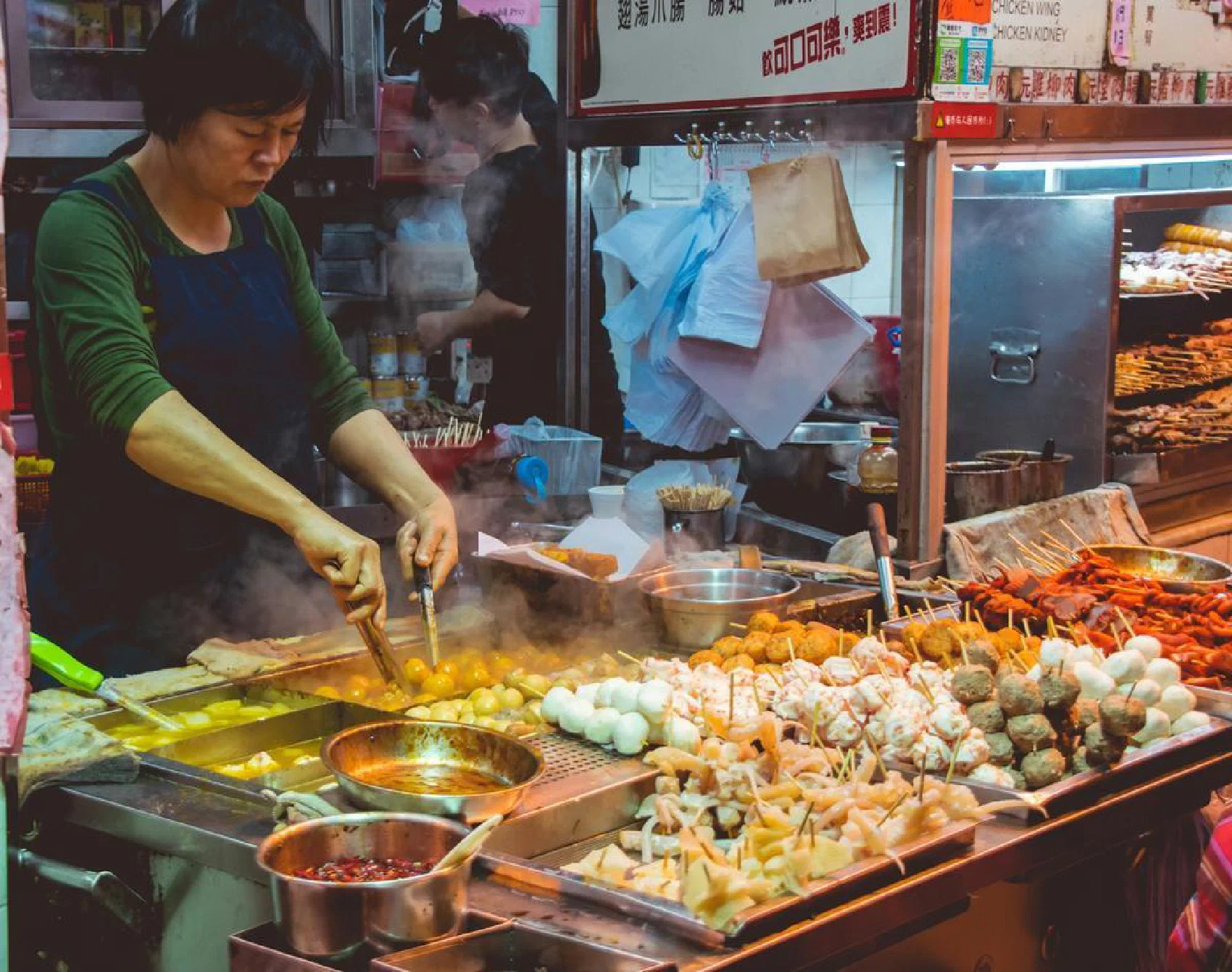
A good example of a free market is street food. Imagine a woman with a cart, a grill, and a pot of broth. She sets up in the evening where people walk home from work. She doesn’t even need a menu, you can see and inspect everything.
Let’s look at what happens here.
What You See is What You Get
The ingredients are in front of you. The portion size is no secret either. The price is on the cart, and if there’s no sign, you ask and she tells you instantly. You watch the food being cooked the moment you order it. There’s no obscure supply chain to investigate and no marketing department between you and the product.
Almost Anyone Can Be a Producer
She needed a cart, a stove, some ingredients, and a spot on the pavement. No licence from a chain, franchise fee, or an investor required.
Almost Anyone Can Afford It
A meal here often costs less than a coffee in a shopping mall. The customer base is the neighbourhood, and, in tourist areas, whoever happens to be walking past.
Quality Enforced by Reputation
She needs you to come back tomorrow. Her reputation covers a hundred metres of street and dies within a week if the food is bad. No regulator has to stand over the grill.
Prices Settle at What People Will Actually Pay
She can’t charge more than her neighbours, or customers walk twenty metres to the next cart. The market is cutthroat, and nobody can corner it. There are thousands of current and potential vendors, no exclusive rights and no platform skimming 30 percent.
It isn’t paradise. Vendors can get harassed by police or shaken down by local thugs. But notice what those problems share: every one is an outside organized power intruding on the market.
What Makes a Market Free
Here’s my working definition. A market is free when at least two conditions hold:
- You can see what you’re getting. Information isn’t concentrated on one side of the transaction. The big-tech dystopia, for instance, rests partly on the fact that almost nobody reads deliberately complicated terms and conditions.
- Entry and exit are open. Ordinary people can join as producers without capital, licences, or a gatekeeper’s permission. Video blogging, for instance, is not a free market because YouTube can block your account and end your career. Video bloggers are feudal serfs.
The first condition is about information asymmetry, which enables abuse and trickery; the second is about access. Both are about power: a market where the seller knows more than the buyer, or where a gatekeeper decides who may sell, isn’t free no matter how little it’s regulated.
This is why I reject the usual definition, where “free” just means “unregulated.” A market captured and run by a handful of corporations is not free.
Capitalism Centralizes
Capitalism has a driving imperative: accumulate. A firm either grows or gets bought by someone who does. Scale then pays for itself through cheaper credit, cheaper logistics, better advertising, more data, and more influence.
Competition under capitalism tends toward consolidation. No villain is required. The logic of the system rewards the biggest player until a market is dominated by one firm or a cartel that acts as one.
Watch what happens to a street food scene:
- A platform appears to aggregate the vendors and handle delivery.
- It burns enormous capital to hide its real operating costs, undercutting every cart on price and embedding itself into how people order, eat, and pay. The bet is simple: recoup the losses later, once the alternative is gone.
- The platform takes a cut and starts ranking vendors by who pays for visibility.
- The platform launches its own dark kitchens, based on user preference data it harvested, and puts them on the top of the list.
- The original vendors can’t afford the cut and can’t afford to leave, because the platform owns the customer relationship.
- The carts disappear, and the “choice” on your phone is five brands owned by the same company, feeding you mass-produced slop.
The same pattern shows up everywhere. A thousand small producers become a handful of chains, and the chains become a handful of holding companies. We’re seeing a clearly documented erosion of small business for exactly that reason.
Scale
Street food is nice, but not every industry can work this way. Nobody expects the average person to fabricate semiconductors or sell CPUs and RAM at a local market. Some industries are natural monopolies: high fixed costs and economies of scale mean one provider can serve the market more cheaply than two, and thousands of people have to cooperate to produce anything of value.
Those industries are where the state has a legitimate role. It doesn’t always have to own them outright, but it has to set the terms they operate on. For de facto monopolies, that means public-utility style oversight: regulated prices, open access, and interoperability. Regulation is imperfect and capturable, but the alternative, letting a private pool of capital monopolize a market and extract arbitrary rents, is much worse.
Conclusion
Markets are not capitalism. Defending markets does not mean defending capitalism, and it certainly doesn’t mean defending the corporations that fly the free market flag.
In fact, capitalism destroys the very thing it claims to champion: competition. The data is pretty clear on this, monopoly capitalism hollows out the competitive markets it claims to celebrate.
This doesn’t mean capital is evil or useless. Capital is extremely useful, and also extremely powerful. Power of that kind over society can only be justified where there is genuine collective oversight and where people have a real say in governing concentrated economic power.
I believe most monopolies can be opened up or subjected to oversight that makes them function more like free markets, and I’ve outlined how: destroy information asymmetry and guarantee freedom of participation.
Some states are moving in that direction, recognizing gatekeepers and forcing them to open their walled gardens and make their infrastructure interoperable.
The EU’s Digital Markets Act is the clearest example, though enforcement is already facing political pressure and corporate resistance. We’re at the beginning of that journey, not the end, but the direction is right.