Table of Contents
Preface
I hate cold weather, so I guess you could call me a climate refugee. About ten years ago, I moved to Thailand to escape the Russian winter, and I never looked back.
That said, Russian summer is amazing, and I used to visit Moscow every year. Unfortunately, the COVID mess kept me away for a couple of years, and now the ongoing military operation in Ukraine has made things too uncertain to plan a trip.
Now that things have settled a bit, I decided to go back to Russia for two months. Here are some thoughts from my trip.
Crossing The Border
Of course, the military operation is still ongoing, and figuring out the border rules was confusing. Both sides are pushing so much propaganda that it’s hard to gauge your own personal risk.
I’d heard that people who’ve been abroad too long can run into problems when they try to re‑enter, so I was ready for questioning and even a phone check. Those are still rare, but they happen in many countries, which justifies having a separate travel phone.
Here’s the reality: Russia’s border is more open than ever. I didn’t even have to talk to an immigration officer. Five years ago, both arrival and departure stamps were mandatory, but now it looks like they’re not even required. I just scanned my passport at the machine, it gave me the go‑ahead, and that was it.
Customs didn’t check anyone. In fact, one guy outside even tried to sell me a SIM card under a fake identity, which feels pretty outrageous given the recent terrorist attacks in Moscow and across the country.
Moscow
Moscow was my first stop, and honestly, it hasn’t changed much. It felt a little cleaner, but the biggest difference is how many Chinese cars there are now. They cover every price range, and they’re actually really nice to drive. One guy I know sold his Lexus right after test driving a Zeekr 001, the difference is that obvious.
I had an interesting talk with a guy from Tajikistan who moved to Russia a few months ago. He’d also worked in the Czech Republic, Poland, and the UAE. We talked about jobs, pay, and racism, and he mentioned that xenophobia in Russia has gotten worse since the latest ISIS attack. He told me about a run-in with a cop during a random traffic stop. The officer was a jerk, and when this guy complained about the verbal abuse, he nearly got deported for talking back. Luckily, the judge sided with him and canceled the deportation order.
He works in construction and drives a taxi, pulling in about $1,500–$2,000 a month after taxes. That doesn’t sound like a lot, but he said it’s the most he’s ever made, more than in Europe or the Gulf. It makes sense when you think about it: living costs are still low in Russia, and taxes are pretty much non-existent for many workers. He’s learned the language, plans to marry his girlfriend, and wants to start a family there.
Samara
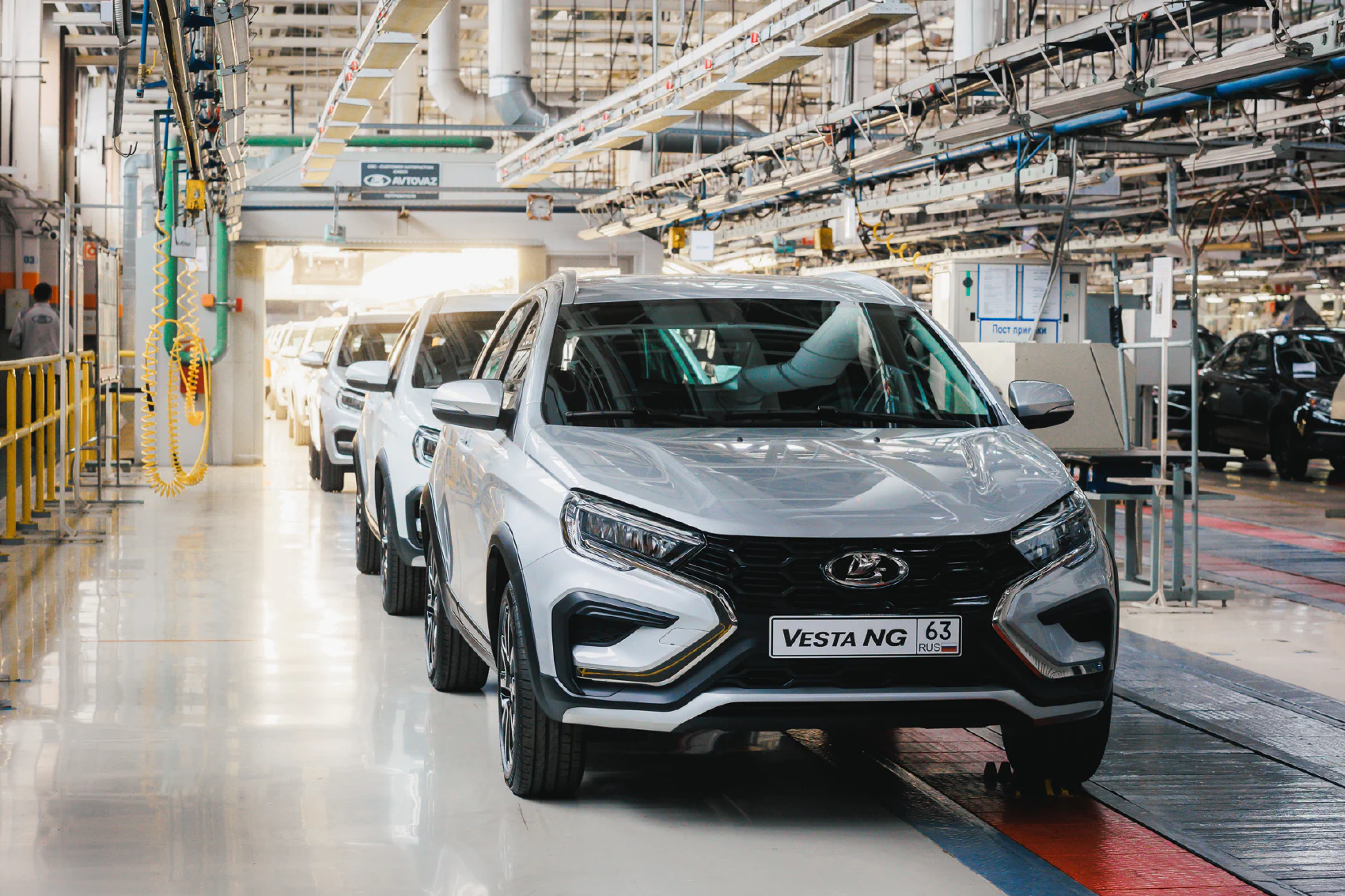
Samara was my next stop, and it’s also my hometown. It’s not exactly famous, but this is where most of Russia’s domestic cars are built. They’re struggling to compete with China, but thanks to protectionist policies, their cheapest models are more affordable. You can actually get a brand new car here for around $7,000.
People in wealthier cities love to make fun of them, but these cars still dominate in less affluent areas. LADA has rolled out a few new models in the last couple of years, and they’re starting to look usable:
Kazan
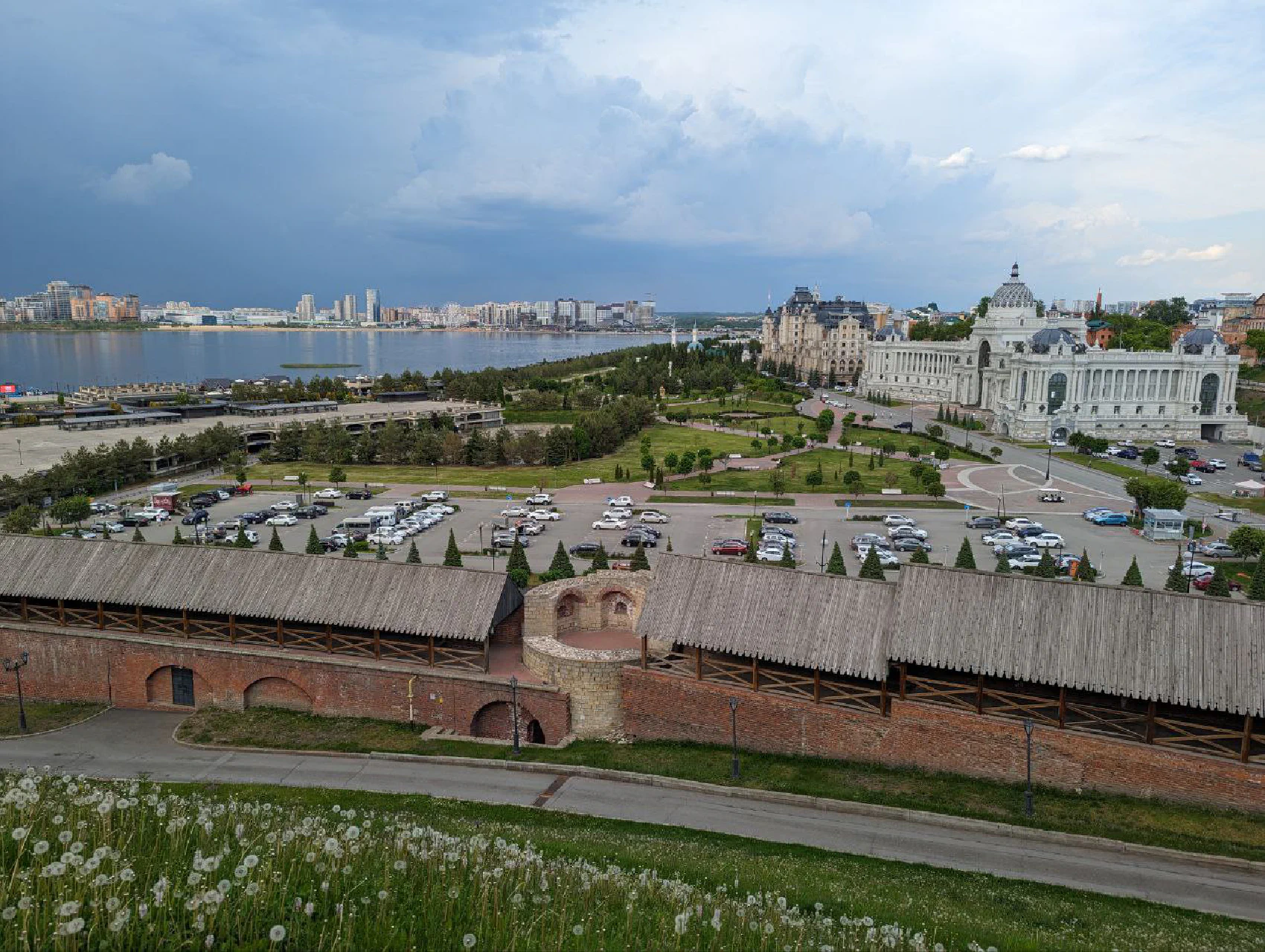
Russia is a federation, and the only way it holds together is by giving a lot of freedom to its ethnically and religiously diverse regions. Take Kazan, it’s a beautiful city and the historic home of the Tatar people. While some Tatars are Orthodox, most are Muslim, and you can feel it in the city.
Locals there take full advantage of that autonomy. Many of them only accept cash or direct transfers to their personal accounts. No receipts, no invoices. The federal government is clearly aware, but they don’t crack down because pushing too hard could stir up separatism.
Sochi
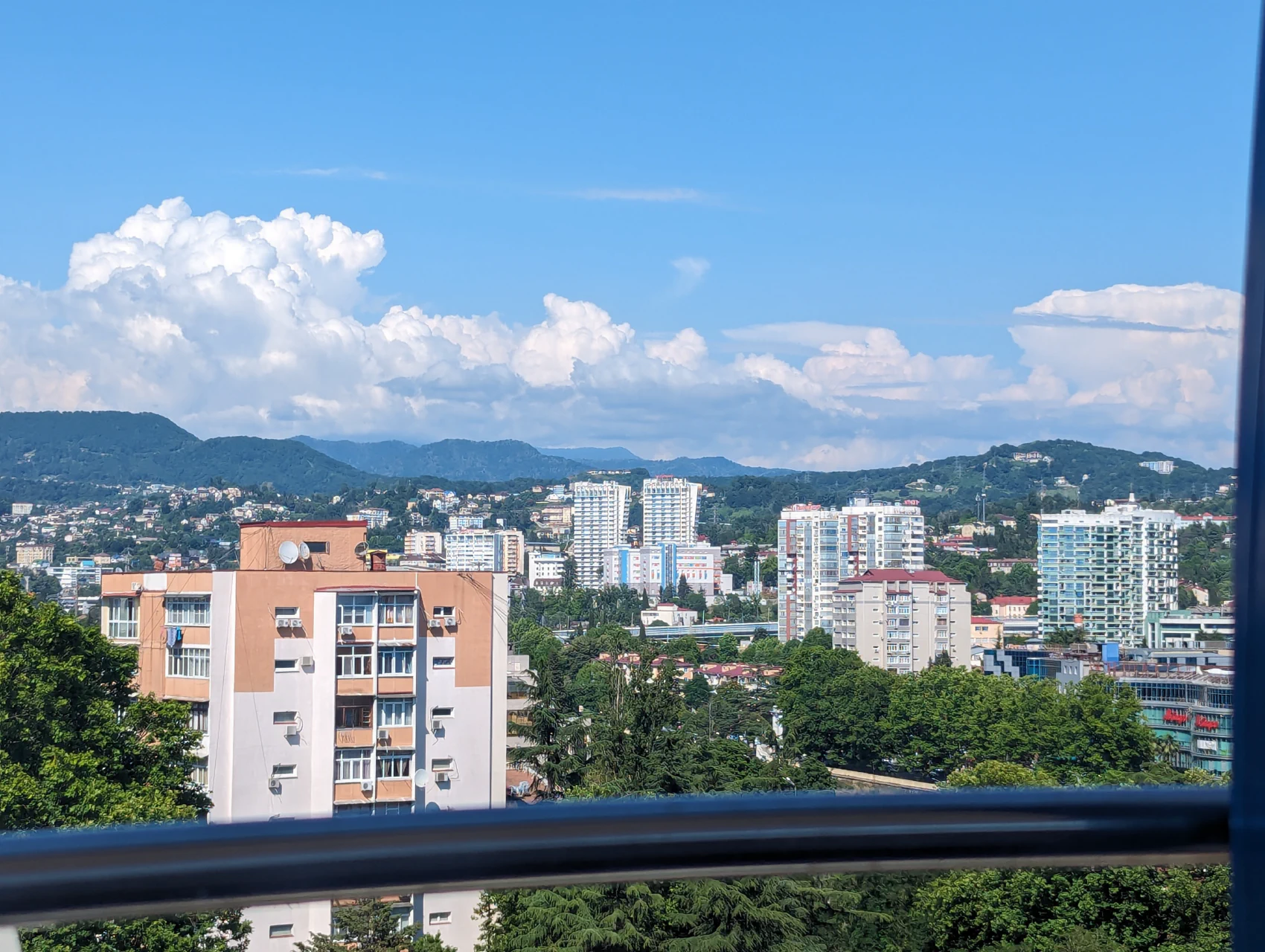
Sochi’s climate and architecture reminded me of Phuket, except Sochi is actually walkable. It’s fairly well-developed, but you run into some annoying infrastructure problems, mostly from all the unregistered guesthouses running ACs full blast in the summer.
The power went out on me a few times, so if you’re staying in one of the cheap places on the outskirts like most tourists do, definitely bring a power bank.
Sochi’s popular with Russians looking for somewhere warm by the Black Sea. Unfortunately, the beaches don’t have sand, just rocks. I’m not a big fan of rocky beaches, so if you actually want to swim in the sea, I’d look at Turkey or Thailand instead. They’re not much more expensive, and the experience is just better.
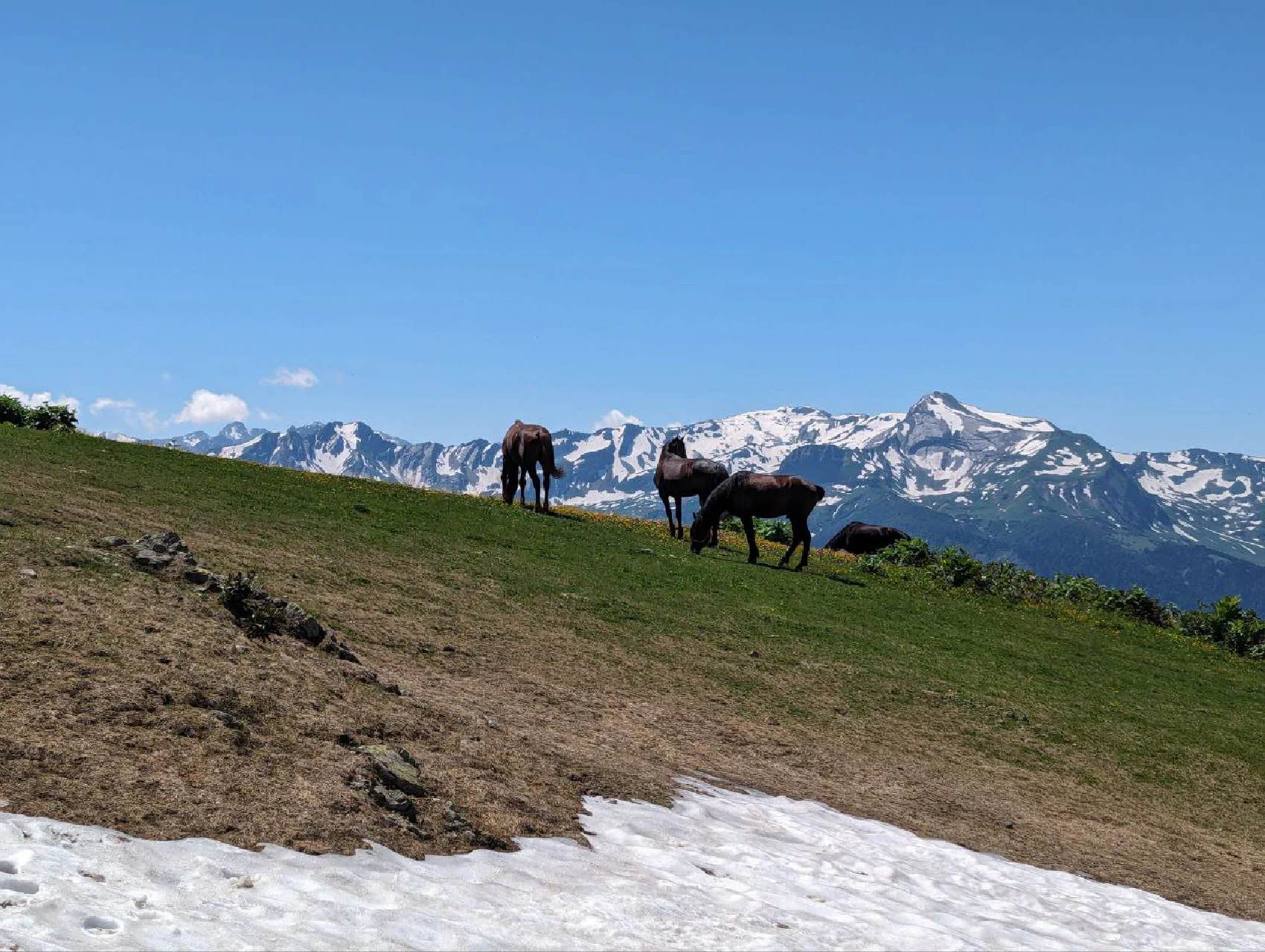
That said, Sochi isn’t just about the sun. It’s also got a big theme park and a top-tier alpine ski resort. I visited Rosa Khutor while I was there, and I was really impressed, the views were stunning, and the whole place was surprisingly well built-out.
Opinions on Events in Ukraine
TLDR: People largely don’t care.
A lot of people imagine Russia as this hyper-centralized Orwellian hive, where everyone just nods along to whatever the state says. The reality is almost the exact opposite. Most people here, myself included, don’t like Putin or the government in general, but that doesn’t mean they’d cheer for any random alternative, especially one tied to foreign interests.
The current leadership is mostly seen as a compromise, and people are pretty clear-eyed about its pros and cons. The government knows this, too. It leans heavily on opinion polls and tries to address the biggest issues that cause public frustration, just to keep things stable.
It was surprisingly hard to find Russians who even wanted to talk about the conflict in Ukraine. And it had nothing to do with fear or oppression, not a single person I met felt that way. To get it, you have to understand the distance between people and the state here. If you’re detached from your own government in your everyday life, why would you care about events abroad?
Sure, there are a few NAFO-style freaks who are totally consumed by state propaganda, but I never heard aggressive talk from actual war vets or from anyone who actually thinks for themselves.
In Sochi, I met a guy who fought in Lugansk and got badly wounded in the legs. He can walk, but it’s not easy anymore. You never hear any bravado from guys like him. They actually respect their opponents and don’t waste time talking trash about western weapons or Ukrainian soldiers, unlike the armchair warriors who are all in on the propaganda.
He told me he regrets volunteering. Money was his main reason for signing up.
Personally, I felt the same way for a long time. I used to sympathize with Ukraine, my family’s from there, and I had a mostly positive view of the west. But if you’re trying to stay rational and follow the truth, you have to change your mind when the facts change.
I’ve always known the last Maidan was a coup, and honestly, that never bothered me. I hoped Ukraine would use it as a chance to liberalize and build its economy, something that could’ve even been good for Russia by setting a positive example.
But the only things the post-coup government actually grew were poverty, corruption, and Nazi ideology. Watching that happen shifted my view from cautiously hopeful to completely indifferent.
The west showed its true colors, too, feeding Ukraine empty promises while hitting ordinary Russians that have nothing to do with the war, with various sanctions. It didn’t really affect me, but I know good families who got hurt.
My thinking is pretty simple: I try to be nice to people by default. But if someone tries to harm me, or backs those who do, I’ll support anyone who makes them pay.
My biggest personal takeaway is this: you may hate your government, and you might have good reasons, but you’ll always be treated worse anywhere else. No other country will give you more rights or freedoms than your own, so you should never turn against it, and you should think long-term about your national interests.
Politicians come and go. Putin isn’t immortal, and he wasn’t wrong when he said the west is full of shit. Hopefully, he’ll be replaced by someone more capable. But I doubt the west would be happy with a stronger Russian leader since power is often a zero-sum game, and today’s western elites don’t want a strong, sovereign Russia.
Sanctions
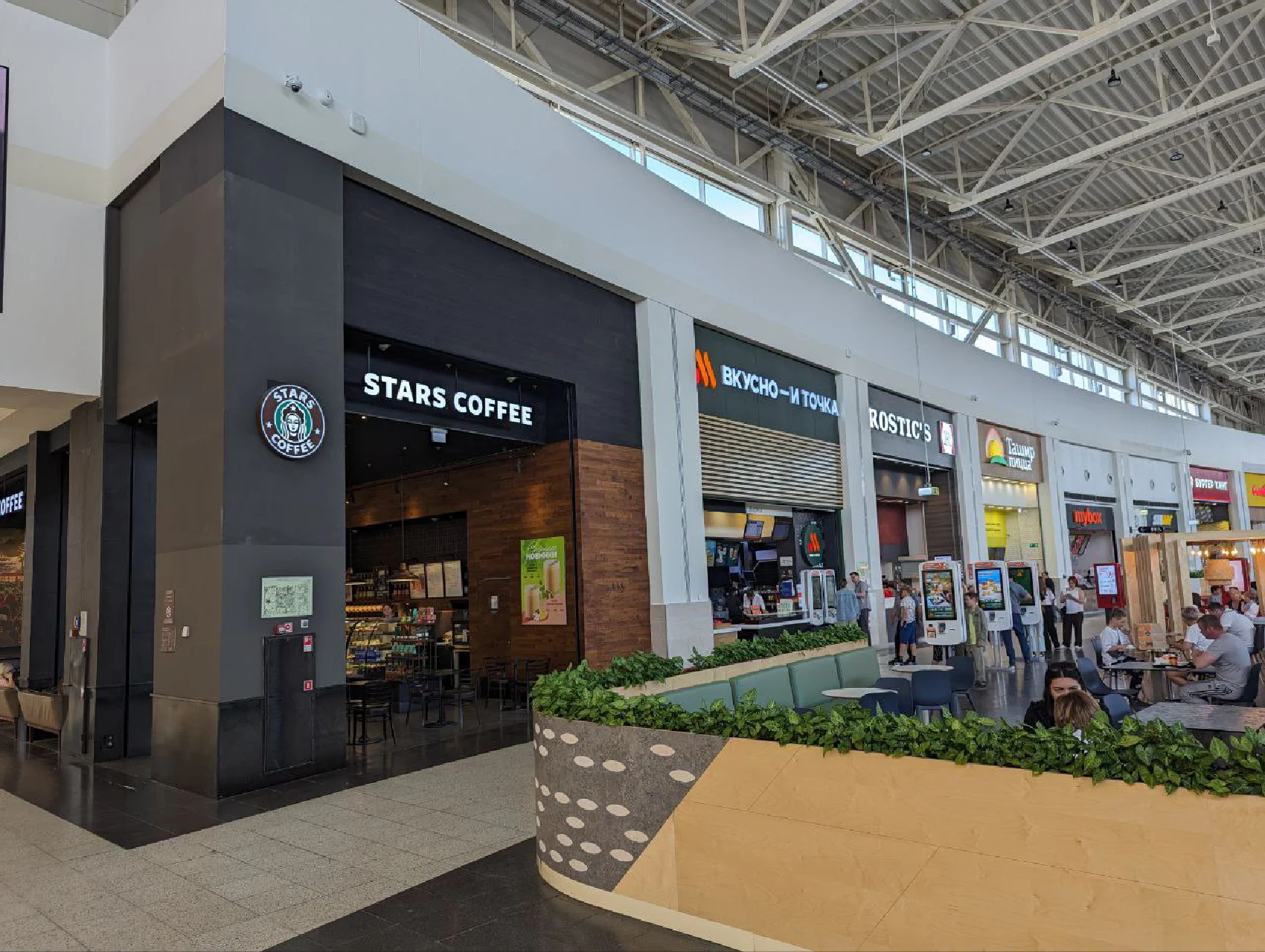
Anyone who says Russia is thriving is either lying or just clueless. Same goes for anyone who claims it’s in ruins. Honestly, not much has really changed. All the talk about western brands pulling out is a joke, I had no trouble finding trendy western stuff in Russia. In fact, there’s even more choice than here in Thailand.
The truth is, you can’t really sanction an advanced economy with large, educated population. Low taxes and open markets fix problems fast. When Visa and Mastercard left, it looked like a disaster, until you remember why Russia built its own payment system, MIR Pay. It works perfectly, and payments go through instantly, probably because the servers are just down the road now.
Trends I Don’t Like
I care most about individual rights and freedoms, which means that I don’t like any government since they all are parasitic and predatory.
Here are some of the darker trends I’ve seen in Russia. Most of them aren’t unique to here, though:
Rampant Internet Censorship
Both Proton Mail and Twitter are blocked in Russia, so you’ll need a reliable VPN to get around it. That was probably the most annoying part of my trip. Thankfully, there are plenty of VPN services that work well, and you can even pay with bitcoin over the Lightning Network. Necessity really is the mother of invention.
This is part of a global trend, and it’s pretty alarming, especially if using a VPN becomes a crime down the line. The worst-case scenario is when countries lock their own people out of information. We need better ways to bypass internet censorship.
Lower Quality Journalism
All the independent media in Russia are gone now, so the only reliable source of news is a handful of trusted Telegram channels. If Telegram gets blocked, people will be left in the dark. These days, doing political journalism inside Russia is almost suicidal, your choices are to leave the country or stick to less risky topics like local news.
It’s not like journalism is thriving globally, but self-censorship in Russia is definitely more advanced. From the state’s point of view, it makes some sense: a lot of political journalists were funded by foreign interests, and they spread harmful lies in sensitive time. More censorship was the result. Sadly, a few honest journalists got caught in the crossfire.
Higher Tax Rates
Right now, individuals and small businesses pay between 6% and 13% in income tax, depending on how you’re registered. The standard rate is a flat 13%, unless you apply for the lower 6% rate as self-employed or a small business. A flat tax is pretty unusual for a country, honestly.
Starting in 2025, Russia is switching to a progressive tax, with a top rate of 22%. It’s the worst thing to happen in years, the last thing Russia needs is to adopt the EU-style tax model. But the direction is clear.
Some people naively think taxes will drop after the war, but that’s not how governments work. Once they get used to taking more money, they never give it back. A government is like a cancer, it only spreads.
Attitude to China
Many Russians do love China nowadays, and I have mixed feelings about that. It’s not that I have anything against China, but I understand that each country is obliged to prioritize the interests of their people, and many things are in fact zero-sum games. In other words, it’s dangerous to depend too much on any single country, China is definitely our situational ally, but we need to diversify.
Conclusion
I really enjoyed my trip and felt as safe as ever, but having to use a VPN to get around pointless internet censorship was annoying. Moscow is still the only Russian city where I’d want to live long-term. In fact, during the summer, it’s the most comfortable place I know, anywhere in the world.
Still, a lot of things aren’t getting better, and some trends are genuinely concerning. It’s hard to predict where things go from here, but I’m leaning pessimistic. I don’t believe you can change a system from the inside, any group in power will always want more control and end up taking more from everyone else.
That’s why I think political change is a dead end. Our energy is better spent building tools that give power back to people. Things like Bitcoin. It’s our best shot at limiting governments and holding onto our freedoms.