I was surprised to learn that Thailand was involved in World War II, and that it initially sided with the Axis powers. Although its involvement was limited, Japan used prisoners of war to build several key logistics projects in Thailand.
I think Russians tend to have a biased view of recent history. WW2 was an important propaganda tool for Soviet leadership, and it continues to be exploited by the current elites. The goal of this propaganda is to frame WW2 as a conflict between socialism and fascism. The entire narrative focuses on the war between the Soviet Union and Nazi Germany, giving all the credit to Soviet leadership while condemning western powers for their perceived cowardice and self‑serving deals with the Nazis.
Do westerners have an unbiased view of WW2? Not at all, which is why it’s important to separate facts from speculation.
Of course, Americans should remember that many of the cruelest and most notorious war criminals were actually Japanese. For many, Asia is simply “too far from home”, which also makes people in the rest of the world less interested in Asian history. Germany’s image is still tainted, but Japan is all about anime, high tech, and pacifism. That seems a bit unfair, doesn’t it?
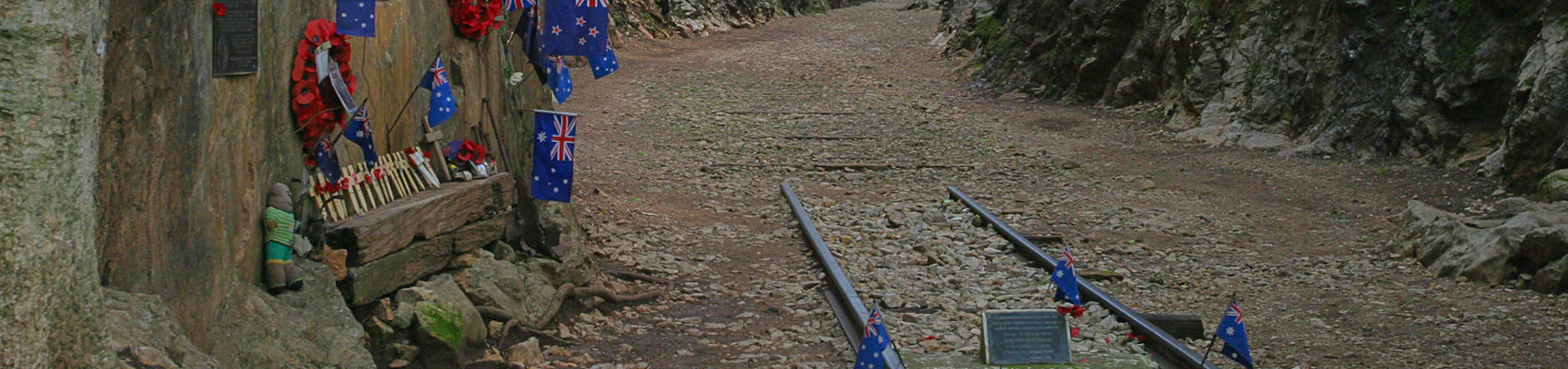
Recently, I’ve been driving trough Kanchanaburi province in Thailand. It isn’t the most popular tourist destination, but it has a few beautiful spots such as Erawan National Park. After visiting a few random places, I decided to find a local museum because I wanted to know more about the history of this province. It turns out, there aren’t many museums in Kanchanaburi, but there was a single place which clearly standed out: Hellfire Pass Interpretive Centre and Memorial Walking Trail.
It’s hard not to notice how clean, ordered, and well‑maintained this place is. It’s all relative, of course, I wouldn’t be surprised to see this level of service and care in a big European city, but it’s very unusual for a place located in the middle of the jungle.
Those were my first impressions, but I still didn’t know what the function of this place was. It turned out to be standing evidence of Japanese war crimes. During WW2, Japan captured many allied soldiers and civilians and used them to build its infrastructure. One of the most ambitious Japanese projects was a railway between Burma and Thailand. This railway was built by prisoners, prisoners who were treated with a cruelty that can easily match German war atrocities.
Here are some numbers. This railway was built by 60,000 prisoners of war, and at least 12,000 of them had died during the construction. Measuring things and keeping numbers is a good way to understand the magnitude of certain historical events. 12,000 is a big number, but it’s not enough to understand what happened. These people could be victims of some terrible incident. Maybe fire, or a tsunami? Well, that’s why we need places like this which can give us some context and translate a set of dry numbers into personal stories and experiences.
It turns out, most of those deaths were preventable. Those people died from malnutrition, beatings and the lack of basic medical supplies. This interpretive centre has a lot of materials which help us to remember that human cruelty is a truly universal thing. It’s kind of obvious, but it feels like our culture has certain biases in favor of non-western societies. There is something mystical about Asia, people often think that Buddhism must be better and more enlightened than our usual religions. It’s acceptable to criticise Christianity and uncover its flaws. It’s also acceptable (but probably dangerous) to criticise Islam, but Buddhism has a completely different image in western eyes.
Popular tourist destinations tend to exacerbate the stereotypes we have about different countries and their history, but there are many things they don’t really want to tell. That’s why I don’t use agencies and plan my trips by myself. Living where locals live, going where locals go and trying to grasp local history can be a good addition to the standard tourist routes and activities.